Recognizing when strain is affecting your leadership and how to respond
The Impact of a Permanent State of Change
Business as usual is a thing of the past. We’ve moved from periods of stability punctuated by change to a state of ongoing transformation. And with increasing complexity and accelerating pace, you can feel pressure as a constant.
Under continuous strain, even the most capable leaders begin to operate differently, often without realizing it. Understanding how prolonged pressure changes your behavior is the starting point for building resilience.
Pressure and Performance
Your reaction to pressure can cut both ways in its effect on performance. Cortisol and adrenaline help sharpen focus under short-term strain, driving alertness and execution. Yet when demands persist without recovery, what begins as productive tension shifts into stress. The same chemical response that once aided focus starts to interfere with cognitive capacity. Over time, these physiological reactions weaken the qualities leadership depends on: clarity, composure, and sound decision-making.
Research links extended periods of strain to changes in leadership behavior. Under continual demand, you might tend to tighten control, take on work that should be shared, and lose awareness of how your behavior affects others. Patience shortens and tone hardens as reactivity replaces reflection. The shift is felt across your team, where trust and openness give way to caution.
MIT Sloan confirms that leaders act as amplifiers of organizational tension. How you regulate your own state influences how pressure is experienced across your team.
The demands themselves can’t be avoided, but they can be addressed. When you recognize and manage your responses, you create the conditions for stability that keep your team focused and engaged in high-pressure environments.
Understanding Resilience
Resilience isn’t endurance. Rather, it’s awareness and recovery in real time. It begins with your ability to recognize strain early and reset before it turns into chronic stress.
Many leaders are conditioned to push through pressure. Fewer recognize the need to pause, regain perspective, and re-engage deliberately. Resilience develops when you remain responsive without becoming reactive. It’s the capacity to adjust pace and focus while maintaining composure.
The PACE Framework for Leadership Under Pressure
You can’t control the complexity of your environment, but you can strengthen how you operate within it. The PACE framework provides a simple structure for maintaining clarity and composure.
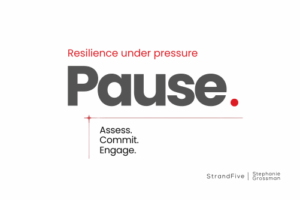
Pause: Interrupt the cycle of reaction. Take a brief moment to breathe, step back, or change your position. That pause provides space for a reset, clearer thinking, and a more deliberate response.
Assess: Clarify what is within your control and where influence is limited. Revisit priorities and decide where to direct attention and energy.
Commit: Decide on a clear course of action. Identify what to start, continue, adjust or stop. Commitment brings direction and accountability.
Engage: Follow through with intention. Observe outcomes and recalibrate as needed. Consistent follow-up reinforces learning essential for continued refinement.
PACE helps you sustain clarity and composure in environments of continuous change. It enables you to notice early signs of strain, pause to regain perspective, and act intentionally rather than on impulse.
The Foundation for Resilience
Resilience builds through recovery and recalibration. It requires self-awareness to recognize when pressure starts to take hold, and self-regulation to remain clear and deliberate in response.
Habits and routines that promote clarity and sound judgment reinforce your ability to operate effectively when pressure remains constant. Micro-breaks between meetings, time to reflect at the end of the day, regular exercise, and sufficient sleep all help restore focus and maintain perspective.
Resilience as a Leadership Discipline
Resilience develops through awareness, reflection, and deliberate response. Applying the PACE framework consistently strengthens your capacity to remain composed and effective under continuous pressure. Modeling that composure creates the conditions for consistent performance across your organization.